

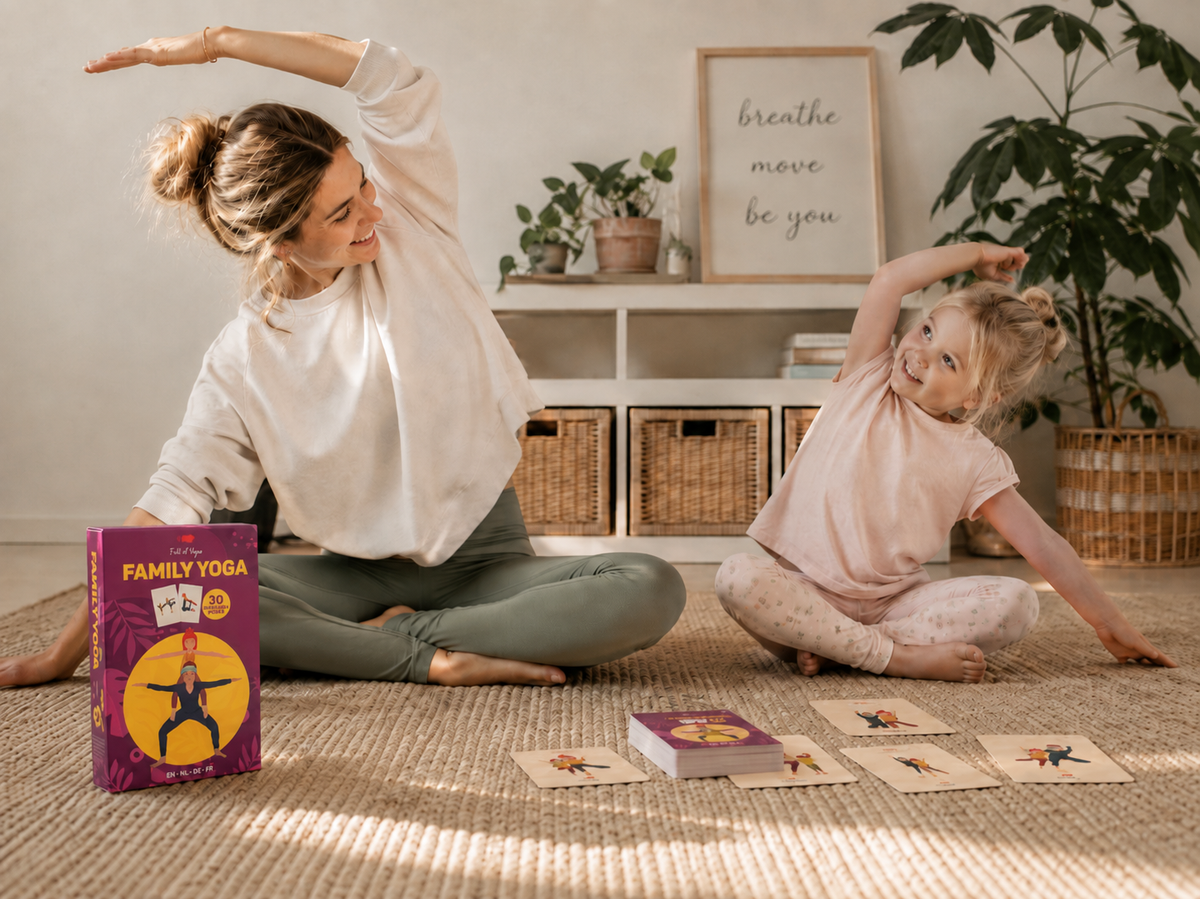
Your child comes home from school and… everything comes out.
The coat lands on the floor. The wrong cup suddenly becomes a disaster. Your child gets restless, angry, starts crying or simply doesn’t want to do anything at all.
Sound familiar?
A school day asks a lot from a child. Listening, learning, playing, concentrating, switching between activities, getting along with others and processing countless impressions along the way.
Some children seem to cope perfectly well at school and only show at home just how full their head and body really are.
And as parents, there’s often one thing we want in that moment: calm.
But helping a child unwind after school doesn’t automatically mean asking them to be still.
Sometimes, they need exactly the opposite.
First move. Release. Have a moment where nothing is expected. Connect. And only then slow down.
Here are 10 simple ways to do that.
1. Don’t expect a conversation straight away
“How was school?”
A completely normal question. But after a busy day, even answering can sometimes feel like too much.
You don’t have to start the conversation straight away.
A cuddle. Something to drink. Walking home together. Simply sitting next to each other for a moment.
The story of their day can come later.
2. Let the body move first
After a day filled with listening, concentrating, switching and adapting, movement can feel incredibly good.
And no, you don’t need to turn it into another sports activity.
Jump as high as you can ten times. Shake out your arms and legs. Dance to one song. Crawl through the living room like a bear. Try a silly yoga pose together.
Keep it small and playful.
Just five minutes of movement can create a lovely transition between school and home.
3. Go outside for a little while
Sometimes, a change of environment is enough.
Go for a short walk, ride a bike, play in the garden or balance along a low wall on the way home.
No activity. No plan.
Just step outside and move.
4. Create something predictable
After a full day of instructions and changes, it can feel reassuring when your child roughly knows what will happen once they get home.
For example:
come home → have something to eat or drink → play or move freely for a while → homework or other plans later.
It definitely doesn’t have to be exactly the same every day.
The most important message is:
You don’t have to do anything right now.
5. Ask what their body needs
This is one of my favourites.
Instead of saying:
“Come on, let’s do something to calm down.”
you can ask:
“What does your body need right now?”
Movement? Lying down? Jumping? A cuddle? A little time alone?
Of course, children won’t always know the answer straight away. And that’s okay.
Make the choice smaller:
“Would you like to jump for a bit or curl up under a blanket?”
By regularly noticing together what the body needs, children gradually learn to recognise those signals for themselves.
And that is a beautiful foundation for body awareness and self-trust.
6. Turn movement into play
[Yoga with children] doesn’t have to be quiet, serious or perfect.
Luckily. 😉
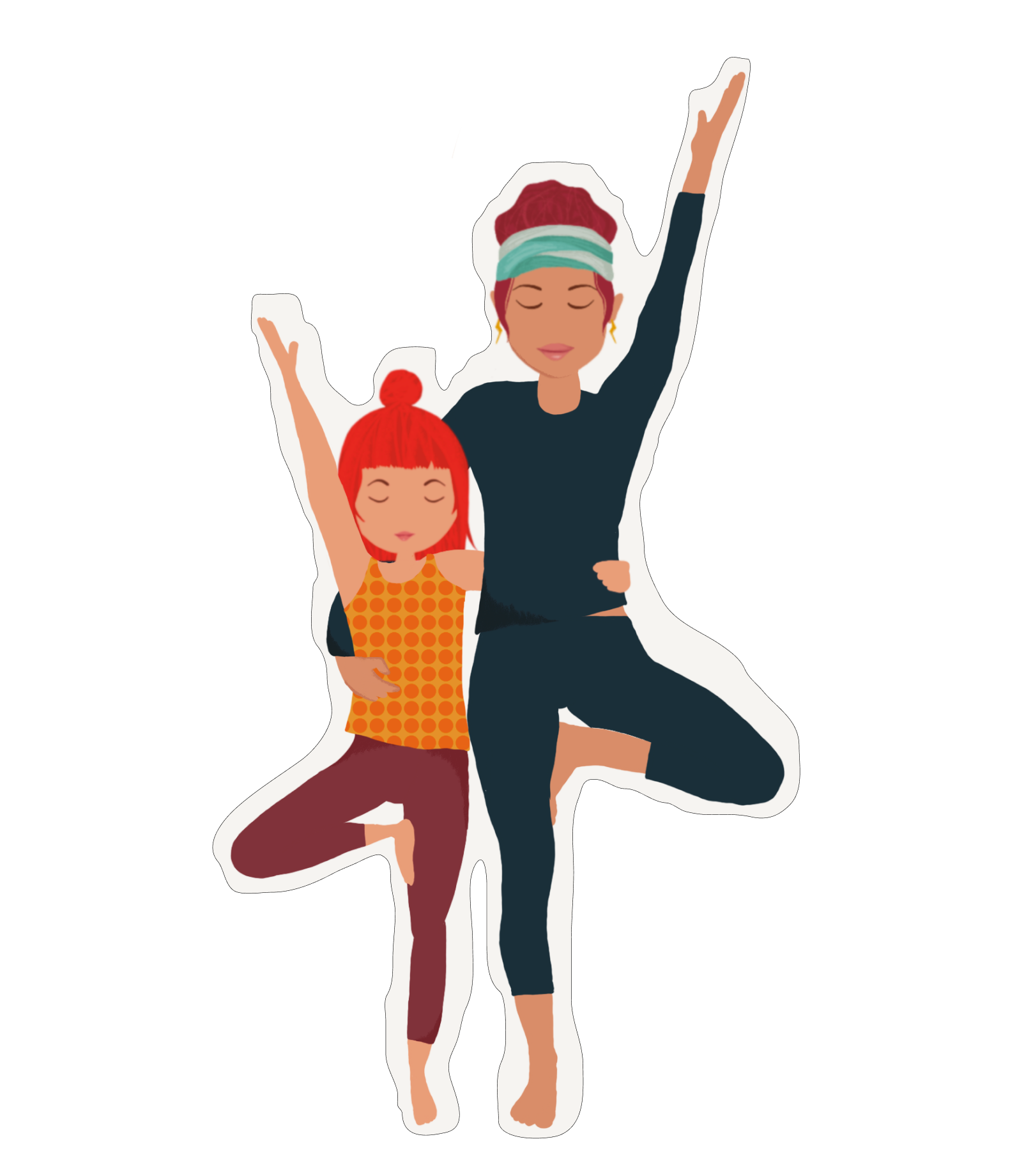
Pretend to be an animal. Play mirror and copy each other’s movements. Let your child invent a pose. Take turns choosing a card. Try a partner pose together without falling over.
Laughing is allowed.
Falling over too.
It’s not about the perfect pose.
It’s about getting out of that busy head for a moment and back into the body.
7. Then try one calm breath
Not every child wants to sit still and take deep breaths the moment they get home from school.
So you don’t necessarily have to start there.
After a little movement, you can try one simple breathing exercise together.
Pretend you’re smelling a flower: breathe in gently through your nose.
Then blow out an imaginary candle: breathe out slowly through your mouth.
Once or twice is enough.
No long exercise. No:
“You need to calm down now.”
Just try it together.
Want to discover more easy breathing games? Take a look at our breathing exercises for children.
8. Make space for quiet too
Not every child unwinds in the same way.
One child wants to talk.
Another wants to move.
And another would rather disappear for a while with Lego, a book, a favourite cuddly toy or a blanket.
That can be completely okay too.
Try to focus less on what “unwinding” is supposed to look like and more on what your child needs in that moment.
9. Choose connection first
When a child comes home angry or upset, we quickly switch into problem-solving mode.
“What happened?”
“Why are you so angry?”
“Calm down.”
But sometimes, nothing needs to be solved yet.
Sit down beside them. Give them a cuddle if they like that. Do something small together.
Making contact without immediately having to talk, explain or solve anything can already mean a lot.
10. Above all, keep it small
Unwinding after school doesn’t need to become another task on your schedule.
You don’t need to roll out a yoga mat.
No candles required.
And you definitely don’t need to teach a 30-minute kids’ yoga class while dinner is burning in the kitchen. 😅
Sometimes five minutes is enough.
One movement.
One pose.
One breath.
Or simply lying on the floor together for a moment.
That’s also why I love using cards so much: you don’t have to think of anything yourself and your child gets to choose too.
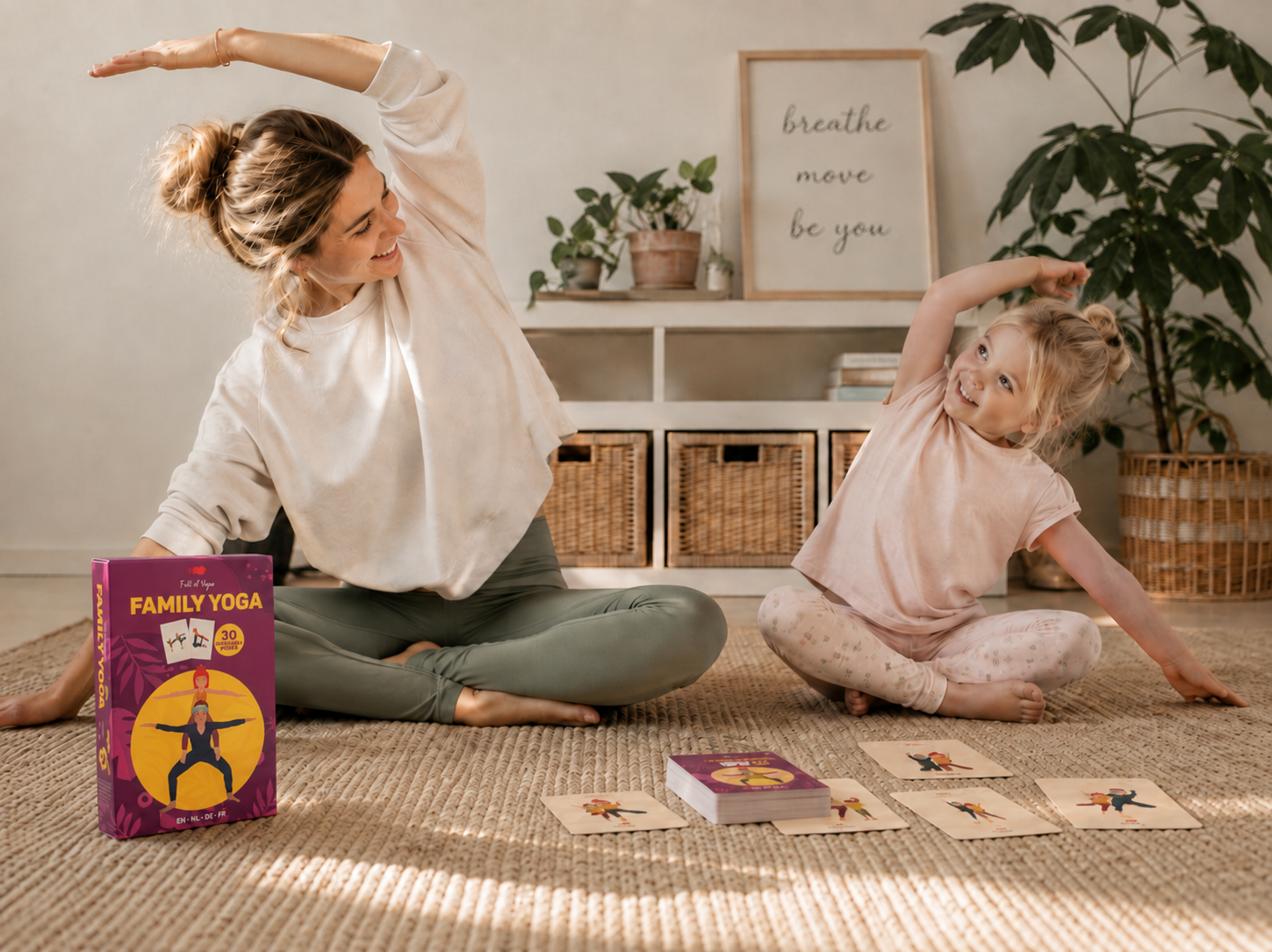
With the Family Yoga Card Set, you choose one playful movement together that feels right in that moment.
Is your child ready to slow down a little afterwards? Then you can try one of the Breathing Exercises Card Set cards.
That’s all it needs to be.
Not because your child has to calm down.
But because, little by little, they discover different ways to notice:
What do I need right now?
A simple after-school reset
Not sure where to begin?
Just keep this order in mind:
First, release.
A few minutes of moving, jumping, dancing or playing outside.
Then, connect.
Do one movement, yoga pose or little game together.
Then, slow down.
One calm breath, lying down for a moment or simply being together.
Done.
No full yoga session. No strict routine.
Some days it takes two minutes. Other days ten.
And on some days, your child won’t want to do anything together at all.
That’s okay too.
It’s not about creating the perfect after-school reset.
It’s about helping your child gradually discover what feels good and what helps.
Frequently asked questions about unwinding after school
Why is my child so angry or restless after school?
A school day asks a lot from children: listening, concentrating, switching between activities, social interaction and processing all kinds of impressions. Some children hold everything together during the day and only show at home how much tension or tiredness has built up.
Should my child rest or move first after school?
That depends on the child and even on the day. Some children need movement to release some tension first, while others seek quiet. Look at what your child seems to need in that moment.
How can I help my child unwind after school?
Keep it simple. Give your child time to arrive home, space to move or do nothing for a while, and avoid asking too many questions straight away. A predictable transition from school to home can also help.
Can yoga help a child unwind after school?
Yoga can be a playful way to move, develop body awareness and then gradually slow down. With children, it doesn’t need to look like a quiet yoga session. Doing just one pose together can already be enough.
What if my child doesn’t want to join in?
Then they don’t have to. Unwinding shouldn’t become another task. Your child might prefer to play alone, go outside or build something. You can offer an activity, but they don’t have to accept the invitation.

 https://www.instagram.com/fullofyoga.shop/





Leave a comment
This site is protected by hCaptcha and the hCaptcha Privacy Policy and Terms of Service apply.